
My Brother Sold My Farmhouse for $1.2 Million Without Telling Me. By Midnight, I Learned the Sale Was Never Really About the House.
The champagne cork hit the ceiling at the exact moment I realized my brother had stolen something worth $1.2 million from me.
“Closing went perfectly,” Ethan announced.
He raised his glass.
“One-point-two million dollars.”
Eighteen members of my family erupted in applause.
I didn’t.
Because the farmhouse Ethan had just sold belonged to me.
And I had never agreed to sell it.
The cork bounced off the chandelier and landed beside a bowl of roasted potatoes. Everyone laughed.
Mom hugged Ethan.
Dad shook his hand.
My cousin Rachel shouted, “Drinks are on you now!”
Ethan grinned.
“To new beginnings.”
I sat frozen near the opposite end of my parents’ walnut dining table.
“What closing?”
The laughter faded.
Ethan looked at me.
“The farmhouse.”
My fork slipped from my fingers.
“What about it?”
His smile widened.
“Sold.”
The room suddenly felt very small.
Three years earlier, I had purchased the restored 1890s farmhouse for $340,000.
It sat on twenty-three acres of meadow outside town, surrounded by maple trees and bordered by a shallow creek.
The house was beautiful.
The barn was extraordinary.
I had spent almost a year converting it into an upscale event venue without destroying its history. I preserved the hand-hewn beams, repaired the original stone foundation, restored the enormous wooden doors, and installed modern plumbing and electricity as discreetly as possible.
It nearly broke me financially.
Then business exploded.
Weddings.
Corporate retreats.
Commercial shoots.
Holiday dinners.
Private concerts.
The property eventually generated roughly $180,000 a year before expenses.
Ethan sometimes helped coordinate bookings when I was overwhelmed.
That was all.
His name wasn’t on the deed.
He hadn’t invested a dollar.
So I stared at him.
“Sold for what?”
“One-point-two million.”
Mom refilled his champagne.
“California couple,” she said. “Apparently they absolutely loved the barn.”
My barn.
“Mom, that’s my property.”
Dad’s expression hardened.
“Natalie.”
I knew that tone.
Don’t make a scene.
“Don’t start this again,” he said.
“Start what?”
“Making everything about you.”
I actually laughed.
“The property you’re celebrating Ethan for selling belongs to me. How exactly am I making this about me?”
Ethan rolled his eyes.
“You always turn everything into a fight.”
“You sold my farmhouse.”
“Keep your voice down,” Dad warned.
Mom sighed.
“Can we please have one nice family dinner?”
That was my family in one sentence.
Ethan could apparently sell my real estate.
But I was rude for mentioning it during dinner.
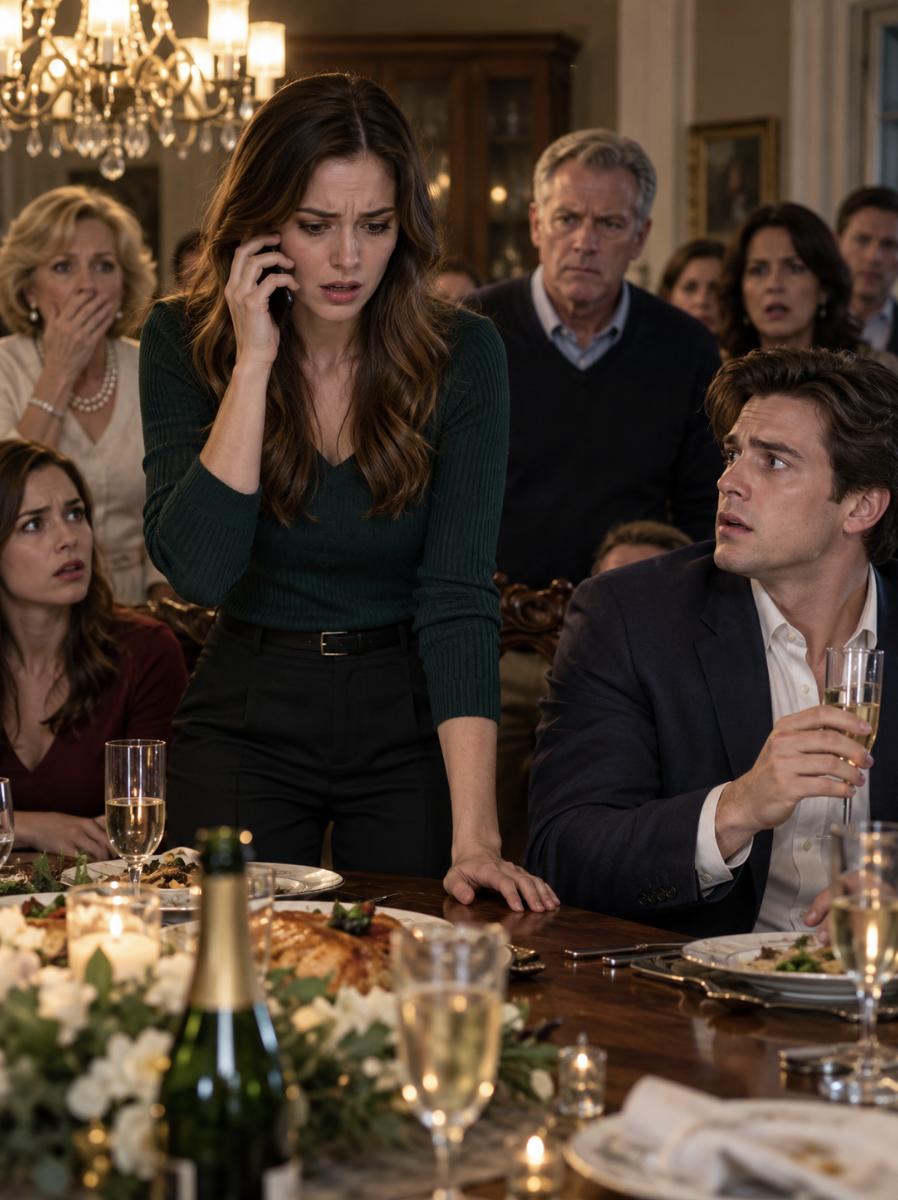
Then my phone vibrated.
The caller ID displayed the name of the title company.
Ethan saw it.
For the first time that evening, his smile disappeared.
I answered.
“Hello?”
“Ms. Natalie Carter?”
“Yes.”
“This is regarding today’s closing on your farmhouse property.”
Everyone went silent.
The woman hesitated.
“We need to confirm something immediately.”
“What?”
“Our records indicate that you never authorized this sale.”
I stared at Ethan.
His champagne glass stopped halfway to his lips.
The woman continued.
“Because the funds have already been wired, we’re initiating a wire fraud investigation immediately.”
Ethan’s face went white.
Then she added:
“There’s something else. The documents used at closing appear to contain your signature.”
My stomach dropped.
“I didn’t sign anything.”
“We suspected that might be the case.”
“What documents?”
“A deed and a notarized authorization giving Ethan Carter permission to negotiate and complete the transaction on your behalf.”
My eyes never left my brother.
“I never gave him that authority.”
“I understand. I’m emailing the documents now.”
My phone buzzed.
I opened the attachment.
There it was.
My name.
Natalie Carter.
The signature was convincing.
But it wasn’t mine.
Then I saw the notary stamp.
And my blood turned cold.
Because I recognized the name.
Diane Carter.
My mother.
I slowly looked up.
Mom was still standing beside Ethan.
“Mom?”
Her face changed.
Dad looked between us.
“What?”
I turned the screen toward them.
“Why is your name on a notarized document saying you witnessed me sign this?”
Mom stared at the phone.
“I…”
Ethan stood abruptly.
“This is ridiculous.”
He reached for his jacket.
“Sit down.”
“Don’t tell me what to do.”
“Then explain the signature.”
“Natalie, you’re overreacting.”
The woman on my phone interrupted.
“Ms. Carter?”
“Yes.”
“We strongly recommend that nobody involved destroy, alter, or remove any documents or electronic devices related to this transaction.”
Ethan stopped moving.
That sentence did what nothing else had.
It frightened him.
Dad rose.
“Ethan, what the hell is going on?”
“Nothing.”
“Then why are you leaving?”
Ethan’s jaw tightened.
Mom suddenly spoke.
“I notarized it.”
Silence.
I looked at her.
“What?”
She swallowed.
“Ethan brought me the paperwork.”
“You watched me sign it?”
“No.”
My hands began trembling.
“Then why did you notarize my signature?”
Mom looked embarrassed rather than horrified.
That somehow made it worse.
“He said you’d already agreed.”
I stared at her.
“You committed fraud because Ethan told you I agreed?”
“Don’t say it like that.”
“How should I say it?”
She lowered her voice.
“He said you were being difficult about paperwork.”
I almost laughed again.
“You notarized a signature you never witnessed because your son told you his sister was being difficult?”
Dad looked furious.
“Diane.”
“Oh, don’t start,” Mom snapped. “You knew he was trying to sell it.”
My attention shifted.
Dad froze.
“You knew?”
His face answered before his mouth did.
Suddenly the dinner table wasn’t divided between Ethan and me anymore.
I was standing alone.
Mom knew.
Dad knew something.
And Ethan had orchestrated the whole thing.
I picked up my purse.
“Natalie,” Dad said.
“Don’t.”
“Let’s talk about this calmly.”
“That’s what you said when Ethan crashed my car at seventeen.”
His face tightened.
“And when he stole Grandma’s credit card in college.”
Ethan scoffed.
“That was twenty years ago.”
“And when twenty thousand dollars disappeared from Dad’s business.”
Dad slammed his palm onto the table.
“Enough!”
There it was.
The old family rule.
Protect Ethan first. Deal with the consequences later.
Except this time, the consequences had seven figures attached.
I left.
The title company asked me to come directly to its office.
By 9:15 p.m., I was sitting across from a closing manager named Laura Bennett and an attorney named Marcus Hale.
A thick file rested between us.
Laura looked exhausted.
“We discovered the problem during a post-closing verification.”
“How?”
“The buyer’s attorney requested confirmation of an easement mentioned in an older survey. When we contacted you directly, something didn’t match.”
“What?”
Marcus slid a photocopy toward me.
“Your driver’s license.”
It looked like mine.
Same photograph.
Same number.
But the expiration date was wrong.
Someone had created a convincing copy using information they already possessed.
“Ethan had copies of my ID,” I whispered.
“For event permits?”
I nodded.
Marcus leaned forward.
“Do you know where the $1.2 million went?”
“Ethan’s account?”
“No.”
He rotated another document toward me.
The wire instructions.
The receiving account wasn’t Ethan’s.
It belonged to an LLC.
Maple Ridge Holdings.
“I’ve never heard of it.”
Marcus watched me carefully.
“Neither had we.”
“Who owns it?”
“That is what we’re trying to establish.”
My phone rang.
Dad.
I ignored it.
Then Mom.
Ignored.
Then Ethan.
I stared at his name.
Marcus said, “You may want to preserve any communication.”
So I answered and put him on speaker.
“Natalie.”
His voice was different now.
No arrogance.
No champagne confidence.
Just fear.
“Where are you?”
“Why?”
“You need to stop this.”
Laura and Marcus exchanged glances.
“Stop what?”
“The investigation.”
I almost smiled.
“You forged my signature.”
“You don’t understand.”
“Then explain.”
Silence.
Finally Ethan whispered:
“The farmhouse wasn’t supposed to be yours.”
I frowned.
“What does that mean?”
“You think you bought it.”
“I did buy it.”
“No. You bought it because someone made sure you could.”
My skin prickled.
“Who?”
Before he answered, I heard another voice in the background.
Mom.
“Ethan, hang up.”
Then the call ended.
Marcus looked at me.
“What did he mean?”
“I don’t know.”
But something had changed.
Until then, I believed I understood the crime.
Ethan wanted money.
Mom helped him.
Dad looked the other way.
Simple greed.
Now I wasn’t sure.
The next morning, I met my attorney, Sarah Klein, at the farmhouse.
The September sun had barely risen above the maple trees.
For three years, that place had felt like proof that I had built something nobody in my family could take credit for.
Now even the sight of it made me uneasy.
Sarah arrived carrying coffee and legal pads.
“First good news,” she said. “The transfer is being challenged, and the buyers have been notified. Nobody is taking possession today.”
I exhaled.
“And the money?”
“Frozen where possible. Federal investigators are tracing it.”
We walked into the barn.
Morning light poured through the high windows.
Sarah stopped beneath one of the original beams.
“You bought this from whom?”
“An estate.”
“Whose?”
“Samuel Whitmore.”
She looked at me.
“You knew him?”
“No.”
“Why did Ethan say the farmhouse wasn’t supposed to be yours?”
“I have no idea.”
Sarah opened her laptop.
“Then we start there.”
We pulled my original purchase documents.
The seller had indeed been the Estate of Samuel Whitmore.
The executor was a law firm in Pennsylvania.
Nothing unusual.
Except for the price.
Sarah frowned.
“Three hundred forty thousand?”
“That was the asking price.”
“For twenty-three acres and restored structures?”
“It needed work.”
“Natalie, even three years ago, comparable land alone was worth more than that.”
I had known I’d gotten a good deal.
I had never asked why.
Sarah made two calls.
The second lasted almost twenty minutes.
When she hung up, she looked unsettled.
“Samuel Whitmore died twelve years ago.”
“So?”
“The estate deliberately held this property for nine years.”
“Why?”
“They were waiting.”
“For what?”
Sarah turned the laptop toward me.
“For you.”
I stared at her.
“What?”
“The estate documents contained private instructions. The property could be sold only after Natalie Carter reached age thirty-two.”
I laughed nervously.
“That’s impossible.”
“You turned thirty-two three years ago.”
The room suddenly seemed colder.
“Why would a dead stranger know my name?”
Sarah didn’t answer.
Instead she opened another document.
“There was a second condition. If you purchased the property, the estate was authorized to accept no more than $350,000, regardless of market value.”
I sat down.
Someone had arranged for me to acquire this place.
Years before I even knew it existed.
“Who was Samuel Whitmore?”
Sarah’s expression changed.
“That is the question.”
Dad finally agreed to meet me that afternoon.
He came alone.
We sat beneath the maple tree behind the barn where brides often took photographs.
He looked ten years older than he had the night before.
“Tell me the truth,” I said.
Dad stared across the meadow.
“Ethan got into trouble.”
“What kind?”
“Debt.”
“How much?”
“Almost six hundred thousand.”
I stared at him.
“How?”
“Investments. Gambling. Borrowing against things he didn’t own.”
Of course.
“So he decided to sell my farmhouse.”
Dad rubbed his forehead.
“He believed there was money tied to the property.”
“What money?”
“I don’t know.”
“Dad.”
“I swear.”
Then I asked the question that mattered.
“Who was Samuel Whitmore?”
His head snapped toward me.
There.
Recognition.
“You know.”
Dad stood.
“I should go.”
I blocked his path.
“Who was he?”
“Natalie.”
“Who?”
Dad’s eyes filled with something I had almost never seen in him.
Fear.
“Ask your mother.”
Mom refused to answer my calls.
So I drove to my parents’ house.
She opened the door but didn’t invite me inside.
“Dad said to ask you about Samuel Whitmore.”
Her face drained.
“I don’t know anyone by that name.”
“You’re lying.”
“Go home.”
“He arranged for me to buy the farmhouse.”
Mom gripped the door.
“That’s impossible.”
“He put my name in his estate instructions nine years before I purchased it.”
She looked like she might faint.
Then something behind her caught my attention.
A cardboard box sat on the hallway floor.
Old photographs spilled from the top.
Mom tried to close the door.
I stopped it.
“What are those?”
“Nothing.”
I pushed inside.
“Natalie!”
I knelt beside the box.
The first photographs were ordinary family pictures.
Then I found one taken outside a hospital.
Mom looked about twenty-five.
Dad stood beside her.
And next to them was a tall man with dark hair.
Someone had written three names on the back.
Diane.
Robert.
Samuel.
My mother sank onto the stairs.
“You knew him.”
She covered her face.
I waited.
Finally she whispered:
“Samuel Whitmore was my first husband.”
Everything inside me stopped.
“What?”
“We were married for three years.”
“You never told us.”
“No.”
“Why?”
“Because he disappeared.”
“Disappeared?”
“He left after…”
She couldn’t finish.
“After what?”
Mom looked at me.
And I suddenly knew.
“No.”
Her eyes filled.
“Natalie—”
“No.”
“Samuel was your biological father.”
The words landed without sound.
For thirty-five years, I had called Robert Carter Dad.
Thirty-five years.
My knees nearly gave out.
“What about Ethan?”
“Robert’s biological son.”
I stared at her.
“So that’s why.”
“Why what?”
“Why you always chose him.”
Mom flinched.
“That isn’t fair.”
I laughed bitterly.
“Isn’t it?”
She stood.
“I loved you.”
“Then why did Samuel disappear?”
Mom looked toward the kitchen.
“He didn’t.”
A terrible silence stretched between us.
“What do you mean?”
“He wanted custody.”
“Custody of me?”
“He found out Robert and I were together. He threatened to expose everything.”
“What happened?”
“Robert convinced him to leave.”
“How?”
“I don’t know.”
I could tell she was lying again.
But before I could push harder, my phone rang.
Sarah.
“Natalie, we found Maple Ridge Holdings.”
I turned away from Mom.
“Who owns it?”
There was a pause.
“Technically? You do.”
I closed my eyes.
“What?”
“The LLC was established eighteen years ago under a trust. You’re the sole beneficiary.”
Mom made a strangled sound behind me.
Sarah continued.
“And Natalie, the $1.2 million Ethan wired after the sale didn’t go to him.”
“Then where did it go?”
“Into your trust.”
I slowly turned toward Mom.
She was crying now.
Nothing made sense.
Why would Ethan commit fraud to sell my property and then send the money to an account belonging to me?
Unless he wasn’t trying to steal the sale proceeds.
Unless he was trying to trigger something.
Sarah found the answer that evening.
The trust agreement contained an activation clause.
It had remained dormant for eighteen years.
It would become fully accessible if one of three events occurred:
My forty-fifth birthday.
My death.
Or—
the sale of the Whitmore farmhouse.
My hands shook as Sarah read it aloud.
“What happens when it’s activated?”
She looked at me.
“You receive everything.”
“How much is everything?”
“Based on preliminary records?”
She turned her laptop around.
I stared at the number.
$18.7 million.
I couldn’t speak.
Samuel Whitmore hadn’t merely left me a farmhouse.
He had created an entire trust.
Investments.
Land.
Cash.
Royalties from several commercial properties.
And Ethan somehow knew.
“He wasn’t stealing the farmhouse,” I whispered.
Sarah nodded.
“He was forcing the trust to activate.”
“But why?”
My phone rang.
Ethan.
This time I answered immediately.
“Where are you?”
“At home.”
“Don’t move.”
“Natalie—”
“Don’t.”
I drove there with Sarah.
When Ethan opened the door, the man who had toasted his million-dollar closing less than twenty-four hours earlier looked exhausted.
I walked inside.
“You knew about the trust.”
He didn’t deny it.
“How?”
“Dad.”
Of course.
“He found Samuel’s documents years ago,” Ethan said.
“What documents?”
“Letters. Trust papers. Financial records.”
“And you sold my property to activate it?”
He nodded.
“Why?”
His eyes filled.
“Because I needed you to find it.”
I laughed.
“You committed multiple felonies as a favor?”
“No.”
He swallowed.
“Because Dad was going to kill the trust before you ever knew it existed.”
Sarah stiffened.
“How?”
“He’s been draining it.”
I stopped breathing.
Ethan continued.
“For years.”
“How much?”
“I don’t know. Millions.”
“Why didn’t you tell me?”
“Because I tried.”
“When?”
“Three months ago. Dad found out. He told me if I said anything, he’d report every debt, every forged loan application, everything I’ve ever done.”
“So instead you forged my signature?”
“I needed an event he couldn’t reverse.”
“And Mom?”
“She thought I was selling the farmhouse for myself. She didn’t know about the trust.”
I stared at him.
For the first time, Ethan didn’t look smug.
He looked ashamed.
“I wasn’t trying to steal your money, Nat.”
“You still stole my property.”
“I knew the sale would be frozen the moment the title company verified your identity.”
“You couldn’t possibly know that.”
“No.”
He looked down.
“That part was a gamble.”
I nearly slapped him.
Instead I laughed.
It was so completely Ethan.
Even his attempt to expose a crime required committing another one.
Then Sarah’s phone buzzed.
She read the message.
Her expression changed.
“What?”
She looked at Ethan.
“The buyers.”
“What about them?”
“They withdrew their complaint.”
I frowned.
“Why?”
Sarah looked at me.
“Because apparently they knew the sale was fraudulent before closing.”
Nobody spoke.
“They were cooperating with investigators.”
Ethan’s mouth fell open.
“You didn’t know?” I asked.
“No.”
Then somebody knocked.
Three hard knocks.
Ethan looked toward the door.
Sarah moved to the window.
“Natalie.”
Her voice was quiet.
“There are federal agents outside.”
Dad was arrested that evening.
Not for the farmhouse.
For eighteen years of financial fraud involving Samuel Whitmore’s trust.
The numbers eventually became staggering.
Fake management fees.
Shell companies.
Fabricated maintenance expenses.
Unauthorized loans.
More than $4.3 million had been diverted.
Dad had discovered the trust documents when I was seventeen.
Instead of telling me, he found a way to position himself near the companies managing its assets.
He had been stealing from Samuel’s estate almost my entire adult life.
Mom claimed she didn’t know.
I believed her about that.
But there was still one question.
What happened to Samuel?
The answer arrived three weeks later.
A federal investigator named Daniel Ross asked me to come to his office.
Sarah came with me.
A single envelope rested on the table.
It had my name written across the front.
Natalie.
The handwriting was unfamiliar.
“Where did you find this?”
Ross folded his hands.
“We didn’t.”
“Then who did?”
He looked toward the door.
“Someone asked us to give it to you.”
The door opened.
An elderly man stepped inside.
Maybe seventy.
Silver hair.
Tall.
Thin.
He looked at me and immediately began crying.
I knew before anyone spoke.
“Samuel?”
He nodded.
My biological father was alive.
Mom had lied about that too.
Samuel hadn’t disappeared.
He had spent years trying to protect the trust while staying away because Robert had threatened to accuse him of kidnapping me if he approached.
But that wasn’t the final surprise.
Not even close.
Samuel sat across from me.
“I watched you from a distance,” he said. “I’m sorry.”
“You arranged the farmhouse?”
“Yes.”
“Why that property?”
His eyes filled.
“Because your grandmother was born there.”
I swallowed.
“And the trust?”
“Yours.”
“Why hide it?”
“Because Robert discovered it.”
I looked at Ross.
“Then why wait until now?”
Samuel smiled sadly.
“Because I wasn’t the person who finally stopped him.”
“Who was?”
The door opened again.
Ethan walked in.
I stared at him.
“No.”
Samuel nodded.
“Your brother contacted me eleven months ago.”
I looked at Ethan.
He couldn’t meet my eyes.
“He found me,” Samuel continued. “He told me Robert had been stealing from you.”
My voice cracked.
“Then the debt?”
“Real,” Ethan admitted.
“The gambling?”
“Real.”
“The forged deed?”
He winced.
“Very real.”
I almost laughed.
“So what part wasn’t?”
Ethan finally looked at me.
“The reason.”
He reached into his jacket and placed something on the table.
A photograph.
We were children.
I was nine.
Ethan was eleven.
We were sitting on the front porch, covered in mud, laughing.
On the back, in Ethan’s handwriting, were six words.
She was always my real sister.
“I spent my whole life taking advantage of the fact that Mom and Dad would protect me,” Ethan said. “And I spent my whole life watching them expect you to protect yourself.”
His voice broke.
“I thought that made me lucky.”
He wiped his eyes.
“Then I found out why.”
I couldn’t speak.
“Dad wasn’t harder on you because you were difficult,” he said. “He was harder on you because every time he looked at you, he saw Samuel.”
Samuel lowered his eyes.
Ethan continued.
“And Mom protected me because she thought giving Robert the perfect son would keep him from punishing her for having you.”
The room blurred through my tears.
“So you created the sale.”
Ethan nodded.
“I needed Dad to believe I was desperate enough to steal the farmhouse. If I simply told you about the trust, he’d move the remaining assets before investigators could trace them.”
“And the California buyers?”
Samuel smiled faintly.
“Friends of mine.”
I stared at him.
The buyers had never intended to take my farmhouse.
The title company had been alerted in advance.
Investigators were already watching the wire.
The entire $1.2 million closing had been bait.
Not for me.
For Robert.
The moment the farmhouse was “sold,” the trust activated.
Robert panicked.
Within forty minutes, he attempted to transfer $2.6 million from one of the trust’s investment accounts into an offshore company.
Federal investigators watched him do it.
That transfer gave them exactly what they needed.
I turned toward Ethan.
“You could have told me afterward.”
“I was going to.”
“When?”
He gave me the smallest smile.
“After champagne.”
Despite everything, I laughed.
Then I cried.
Then, somehow, I did both.
Six months later, the farmhouse hosted another family dinner.
A much smaller one.
Mom wasn’t there.
She and I were speaking occasionally, but forgiveness was going to take time.
Robert was awaiting trial.
Most of the stolen trust assets had been recovered or traced.
Samuel sat beneath the restored beams of his mother’s childhood barn, staring around as though he’d stepped backward through time.
And Ethan?
He was there too.
He had pleaded guilty to document fraud and received a sentence that included probation, restitution, and community service, largely because of his cooperation with the larger federal investigation.
He had also sold his condo to repay his debts.
For the first time in his life, nobody rescued him.
Including me.
Especially me.
But we were rebuilding something.
Slowly.
Honestly.
After dinner, Ethan carried two glasses onto the porch.
“Champagne?” he asked.
I stared at him.
He laughed.
“Too soon?”
“About twenty years too soon.”
He handed me sparkling water instead.
Beyond the porch, evening settled across the twenty-three acres.
The maple trees moved gently in the wind.
The farmhouse was still mine.
But it felt different now.
For years, I believed I had bought it because I was smart enough to recognize an opportunity.
Then I learned Samuel had quietly made that opportunity possible.
At first, that bothered me.
I wanted my success to belong entirely to me.
Samuel understood.
So one afternoon he showed me the original estate instructions.
There was one paragraph Sarah hadn’t mentioned.
Samuel had written it years earlier.
Offer Natalie the property once, at a price she can realistically afford. Do not tell her why. If she declines, never approach her again. If she accepts, give her no further assistance. Whatever she builds there must belong to her.
That paragraph meant more to me than the millions.
Samuel hadn’t built my business.
He hadn’t booked the weddings.
He hadn’t survived the contractors, permits, inspections, sleepless nights, and near disasters.
He had simply opened one door.
I had walked through it.
Ethan leaned against the porch railing.
“You know what the craziest part is?”
“What?”
“You were right at dinner.”
“About?”
“The farmhouse literally being yours.”
I smiled.
“I usually am.”
He groaned.
“Please don’t become unbearable.”
“Too late.”
For a while, neither of us spoke.
Then a black sedan appeared at the end of the driveway.
I frowned.
“Expecting someone?”
Ethan shook his head.
The car stopped.
Samuel stepped outside the barn when he saw it.
And his expression changed.
A woman climbed from the back seat.
She was perhaps sixty.
Elegant.
Silver threaded through her dark hair.
Samuel went completely still.
The woman looked at him.
Then at me.
And tears filled her eyes.
“Who is that?” I whispered.
Samuel didn’t answer.
The woman walked toward the porch holding an old leather folder.
When she reached me, she opened it.
Inside was another photograph.
My mother.
Samuel.
And the woman standing in front of me.
All three looked barely twenty.
“What is this?”
Her hands trembled.
“There’s one final thing Samuel never told you.”
I looked at him.
Samuel closed his eyes.
The woman continued.
“The trust wasn’t created by Samuel.”
My stomach tightened.
“Then who created it?”
She turned over the photograph.
A name was written on the back.
Elizabeth Whitmore.
Her name.
I looked up.
“Who are you?”
She smiled through tears.
“I’m Samuel’s sister.”
I glanced at Samuel.
“I don’t understand.”
Elizabeth opened the leather folder.
Inside was an original birth certificate.
Mine.
I saw Mom’s name.
Diane Carter.
Then I looked at the line marked father.
It didn’t say Samuel Whitmore.
It didn’t say Robert Carter either.
It was blank.
My heart began pounding.
“What does this mean?”
Samuel stepped forward.
“Natalie, I’m not your biological father.”
The world seemed to stop.
“But Mom said—”
“Your mother believed I was.”
“Believed?”
Elizabeth took my hand.
“The trust wasn’t protecting Samuel’s daughter.”
Her next words changed the story of my life one final time.
“It was protecting mine.”
I stared at her.
Elizabeth explained that she and my mother had been inseparable in college.
One night, after a party and a series of choices neither of them understood clearly at the time, Diane became pregnant.
Everyone assumed Samuel was the father because Diane and Samuel were together.
Years later, Samuel quietly took a DNA test.
He wasn’t.
But Elizabeth knew who was.
Her husband.
A wealthy real-estate developer named Thomas Whitmore—Samuel’s older cousin by marriage, the man whose early investments eventually created most of the fortune inside the trust.
Thomas died before I turned five.
Before his death, he learned the truth.
He could have destroyed two families.
Instead, he created the trust.
Not because I was Samuel’s daughter.
Because I was his.
Samuel agreed to let everyone believe otherwise.
Elizabeth, devastated but unwilling to punish a child for the betrayals of adults, became trustee.
And the farmhouse?
It had belonged to Thomas’s mother.
My biological grandmother.
Suddenly every strange piece fit.
The property.
The trust.
The secrecy.
Samuel’s protection.
Robert’s resentment.
Even Elizabeth’s presence.
I looked at her.
“You protected money for the child your husband had with another woman?”
Elizabeth’s eyes filled.
“No.”
She squeezed my hand.
“I protected a little girl who hadn’t done anything wrong.”
That was the moment I finally understood something my family had spent thirty-five years teaching me backward.
Family wasn’t the person who shared the most DNA with you.
It wasn’t the parent who demanded loyalty while hiding the truth.
It wasn’t the sibling who never made mistakes.
And it certainly wasn’t the person who said, Don’t make a scene, while someone stole from you.
Family was the person who protected you when protecting you cost them something.
Samuel had done that.
Elizabeth had done that.
And, in his catastrophically reckless, completely Ethan way, my brother had finally done it too.
I looked across the porch at him.
He raised his sparkling water.
“No more real estate deals,” I said.
“Agreed.”
“No forged signatures.”
“Definitely.”
“No surprises.”
Ethan hesitated.
I narrowed my eyes.
“Ethan.”
He laughed.
“Fine. No surprises.”
I lifted my glass.
Behind us stood a farmhouse that had survived more than a century of storms, winters, weddings, secrets, betrayals, and people who believed ownership was merely a name written on paper.
But I knew better now.
The farmhouse had never been the inheritance.
Neither had the $18.7 million trust.
The real inheritance was the truth.
And the truth was that the people who had spent my entire life convincing me I was difficult had only been afraid that one day I would discover how much had been taken from me.
They were right to be afraid.
Because I did discover it.
I recovered my property.
I recovered the money.
I found the father who had protected me even though he wasn’t my father.
I found the woman who had guarded my future despite having every reason to resent my existence.
And somehow, after a lifetime of competing with him, I finally found my brother too.
All because Ethan Carter raised a champagne glass at a family dinner and proudly announced the worst real-estate deal of his life.
“One-point-two million dollars.”
He thought he was announcing a sale.
Instead, he accidentally gave me back my entire life.